solar design
House & Nurcery
the project
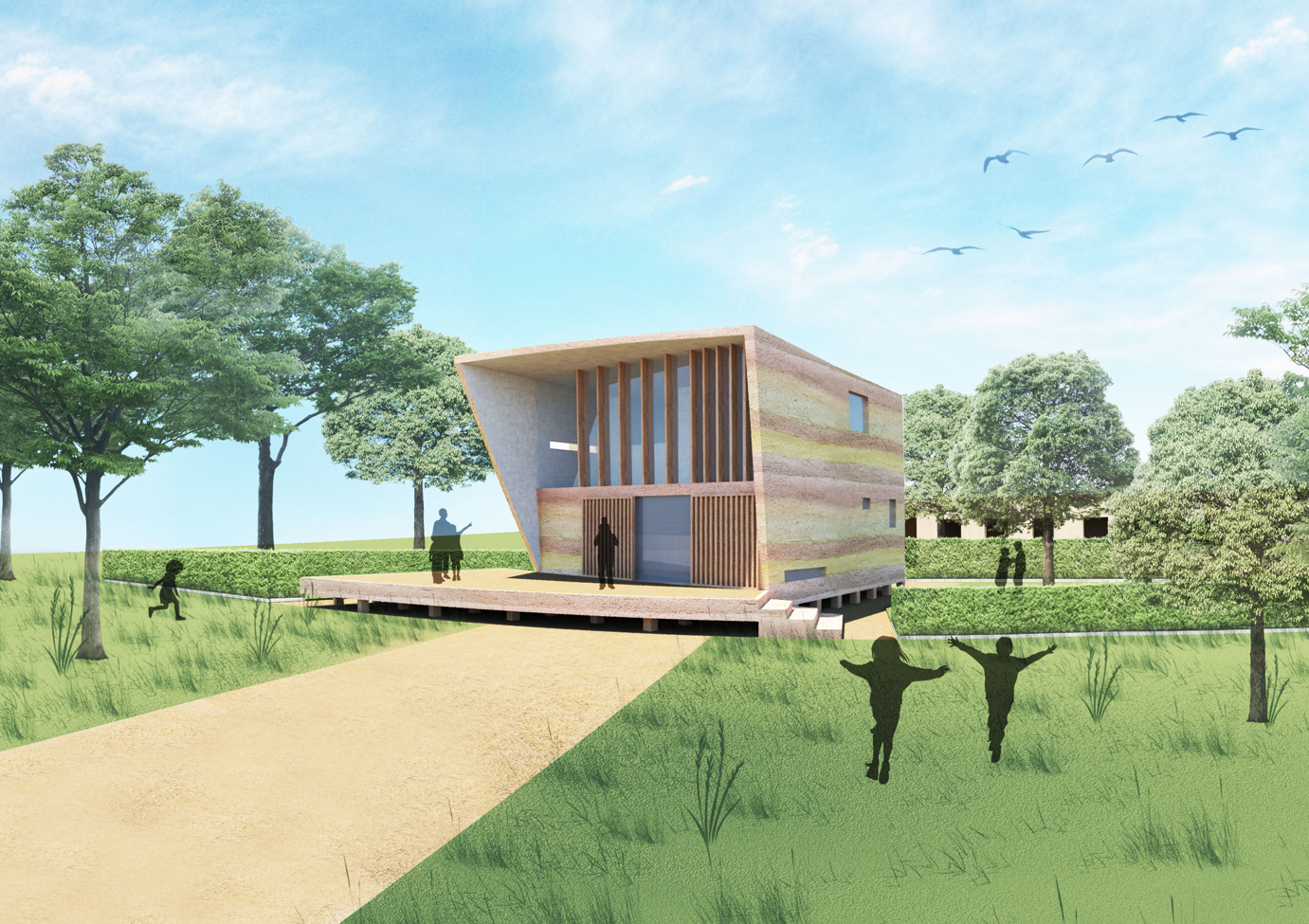
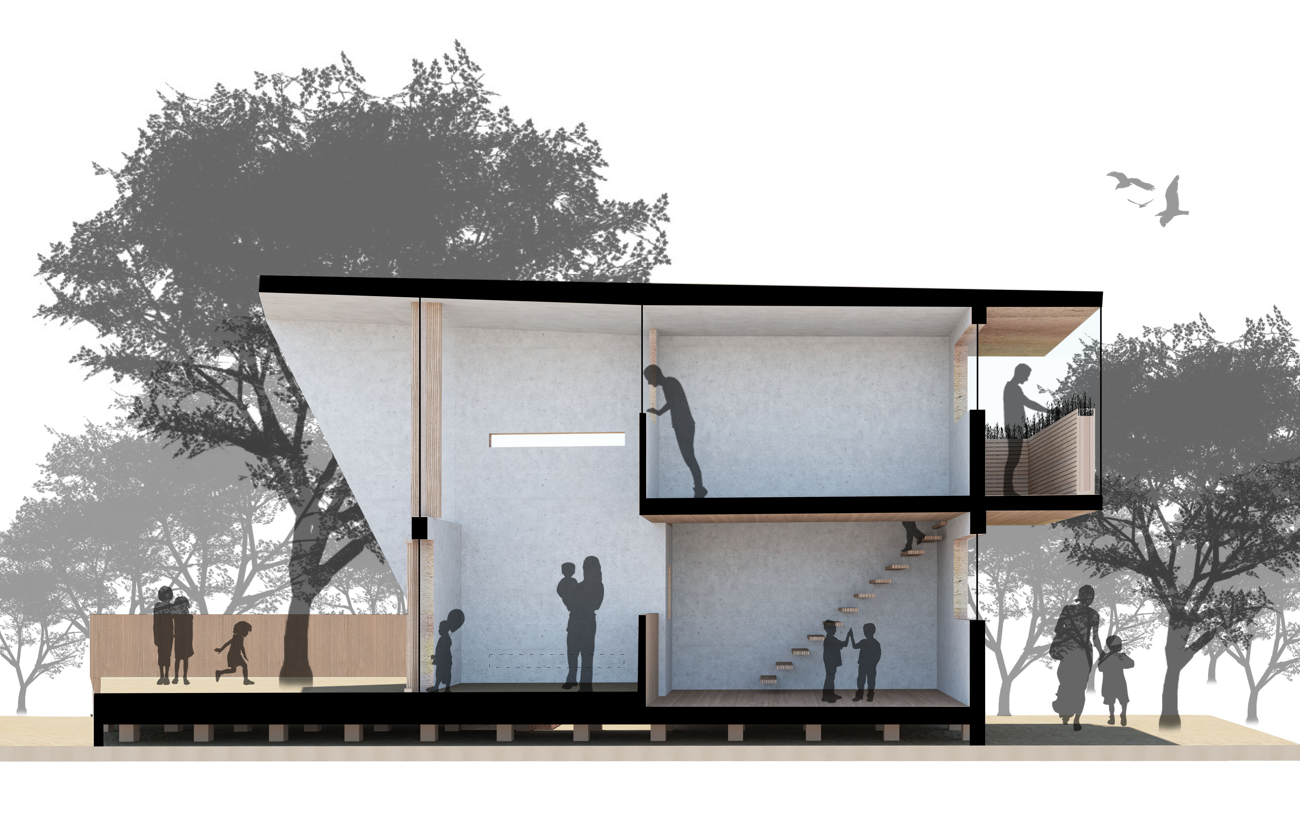
This project explores the design of a climate-responsive house that also functions as a daytime nursery, combining domestic life with community care in a single adaptable space. Conceived for a solar design course and imagined in an African context where compressed earth construction is both practical and culturally grounded, the house responds to environmental, social, and spatial needs at once. The ground floor is designed to transform throughout the day, allowing the living area to accommodate up to ten babies and toddlers during nursery hours, then return to a private family setting after use.
Personal conceptual project — designed for the Environmental Design and Engineering MSc at the Bartlett.
The concept
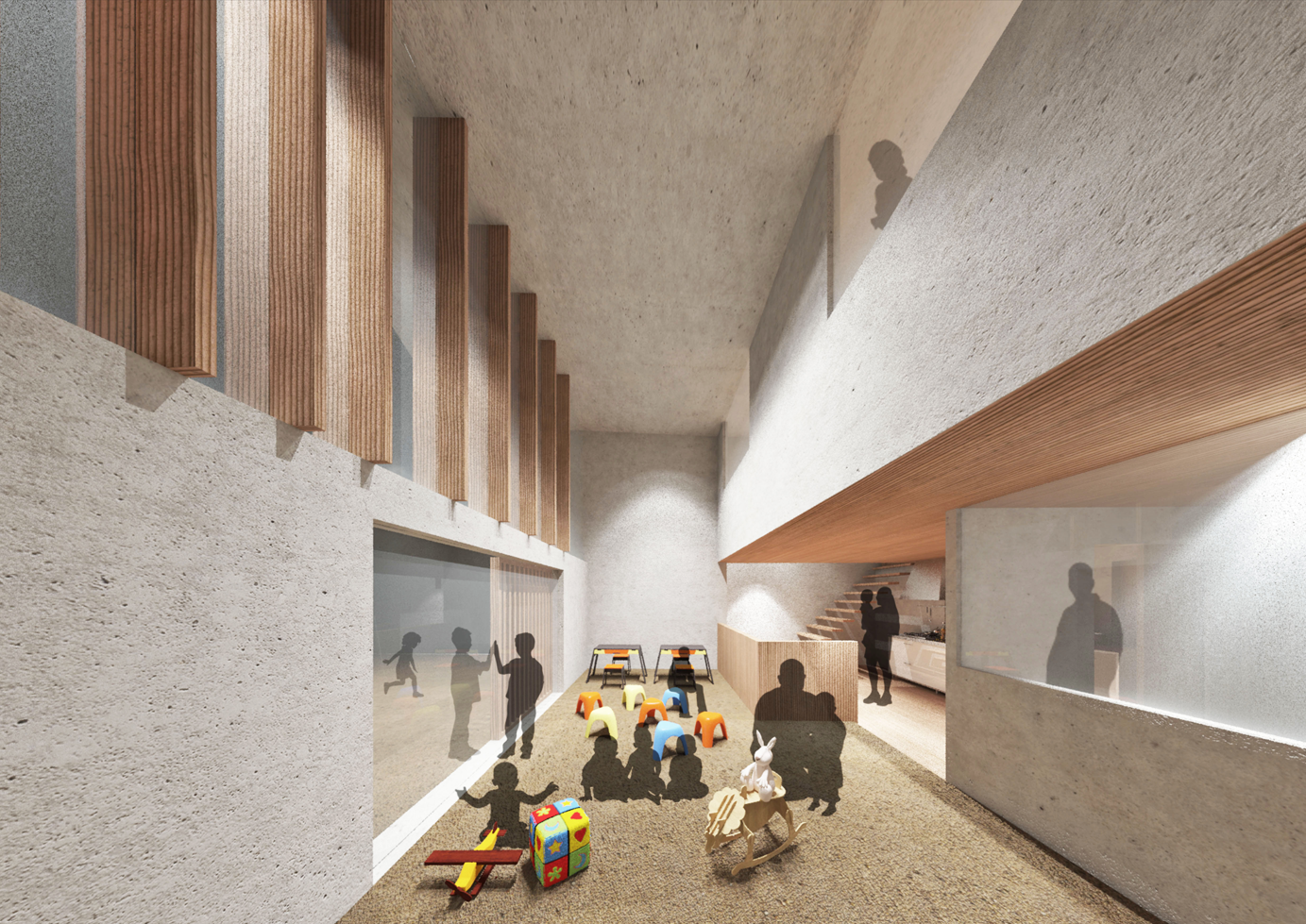
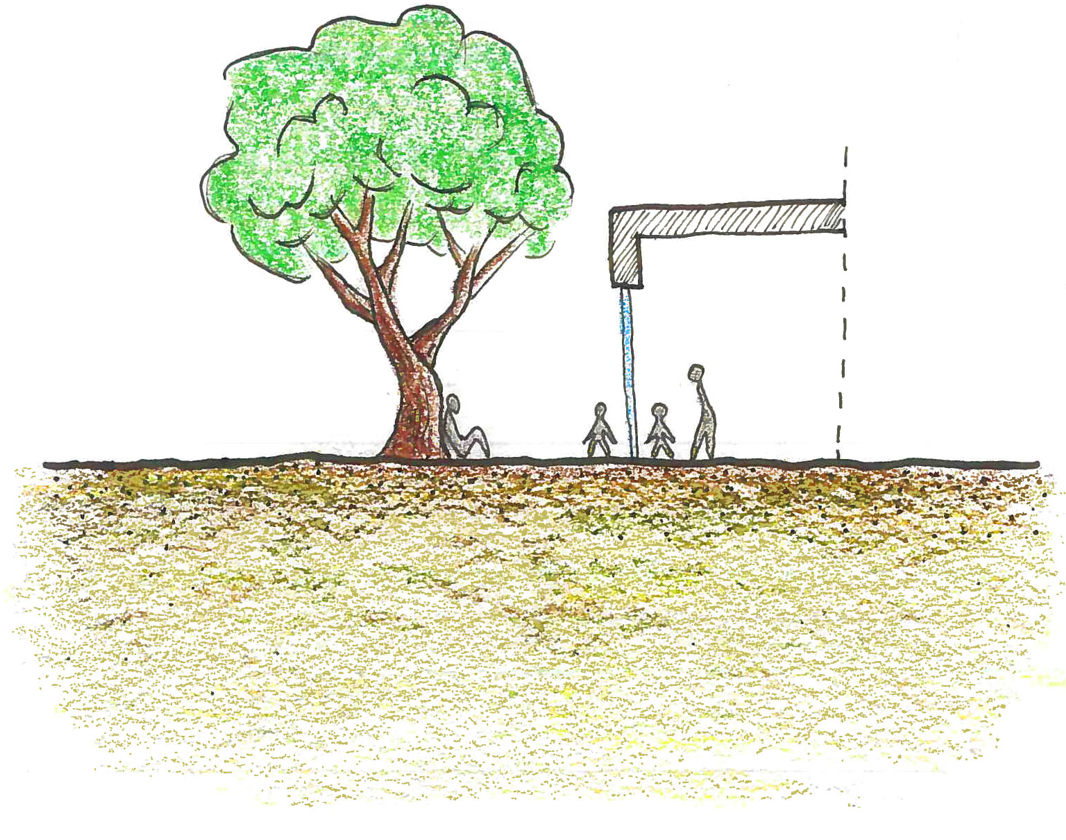
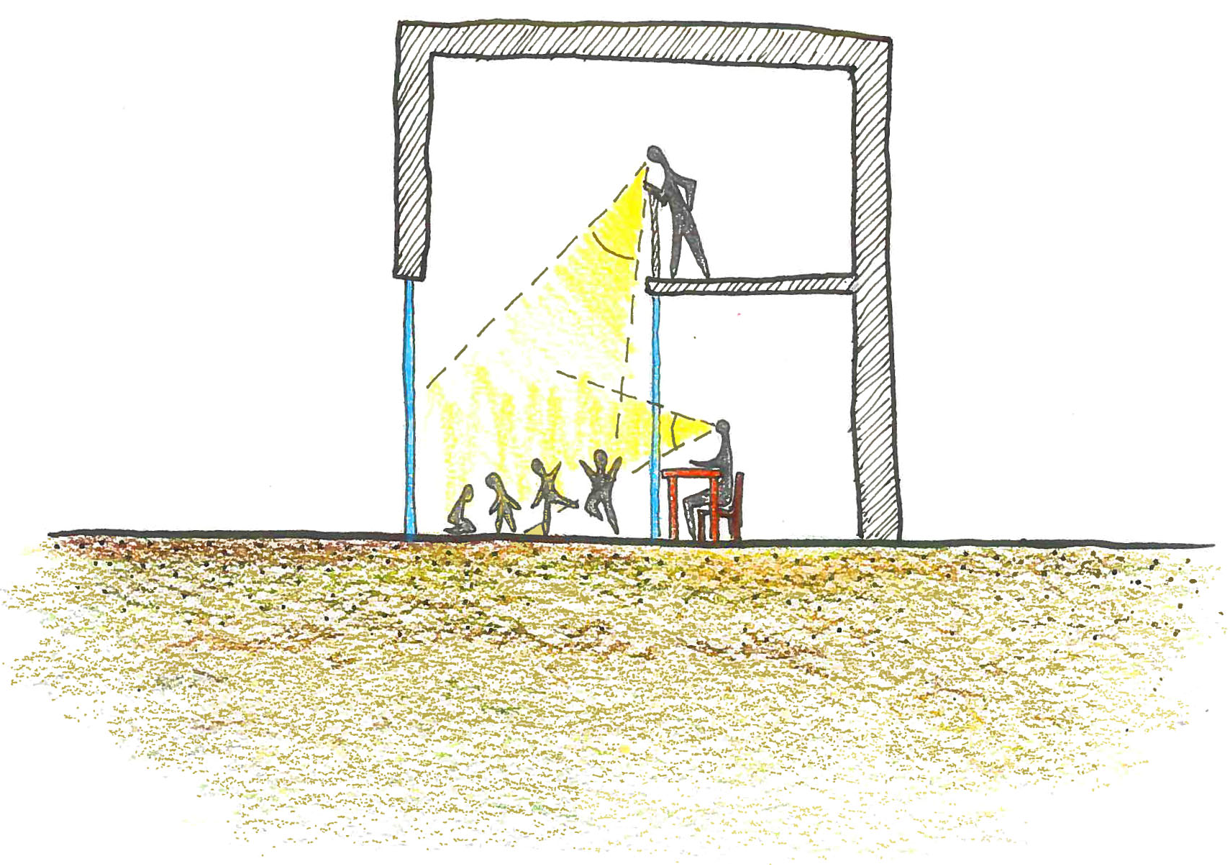
At the heart of the project is a flexible living space that can shift easily between home and nursery through movable furniture and reconfigurable use. Because supervision is essential in a childcare environment, the design ensures that the main nursery space remains visually connected to the rest of the house, including the upper floor. This creates a strong sense of openness and continuity, allowing daily life, care, and movement to remain interconnected. The living area is also designed to extend seamlessly toward the outdoors, where the boundary between inside and outside is softened through material continuity and an integrated play landscape.
Concept Hand sketches
materials
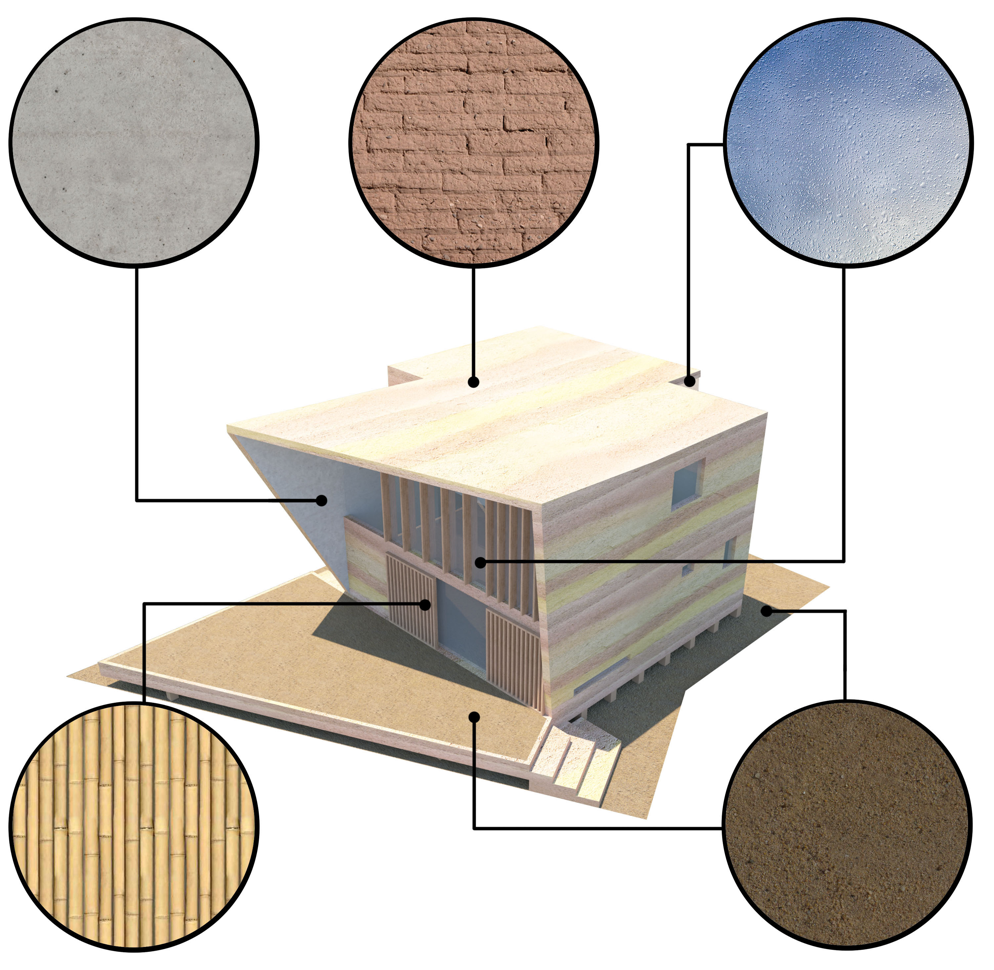
The primary wall material is compressed earth, chosen for its low environmental impact, thermal performance, and connection to local building traditions. Its natural texture and mass give the house a grounded architectural character while also supporting indoor comfort. The use of earth-based construction reinforces the project’s relationship to place, offering a material solution that is both sustainable and regionally appropriate. Inside and outside, the palette remains simple and tactile, with sand-like ground surfaces helping to create a playful, continuous environment for children.
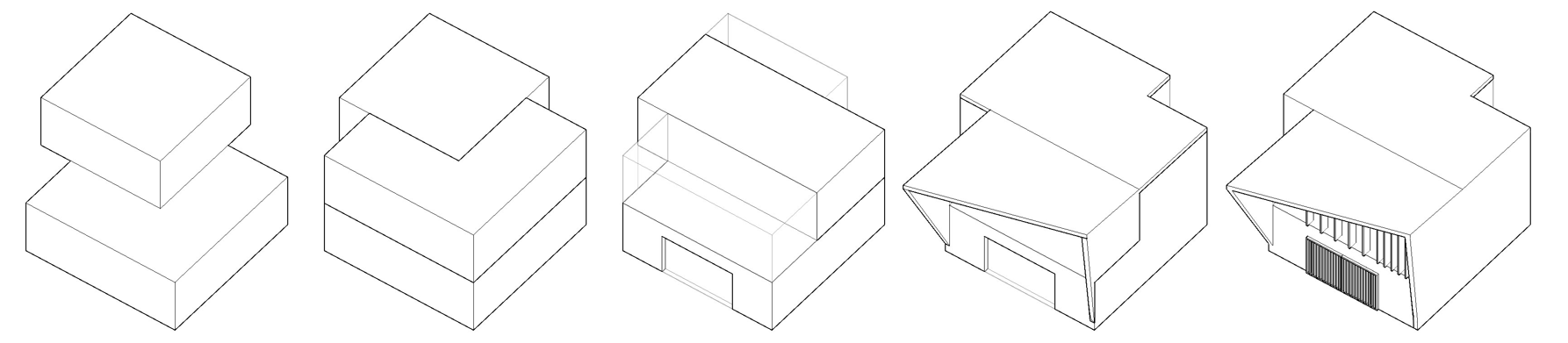
Geometry Diagram - 3D in AutoCAD
Environmental strategy
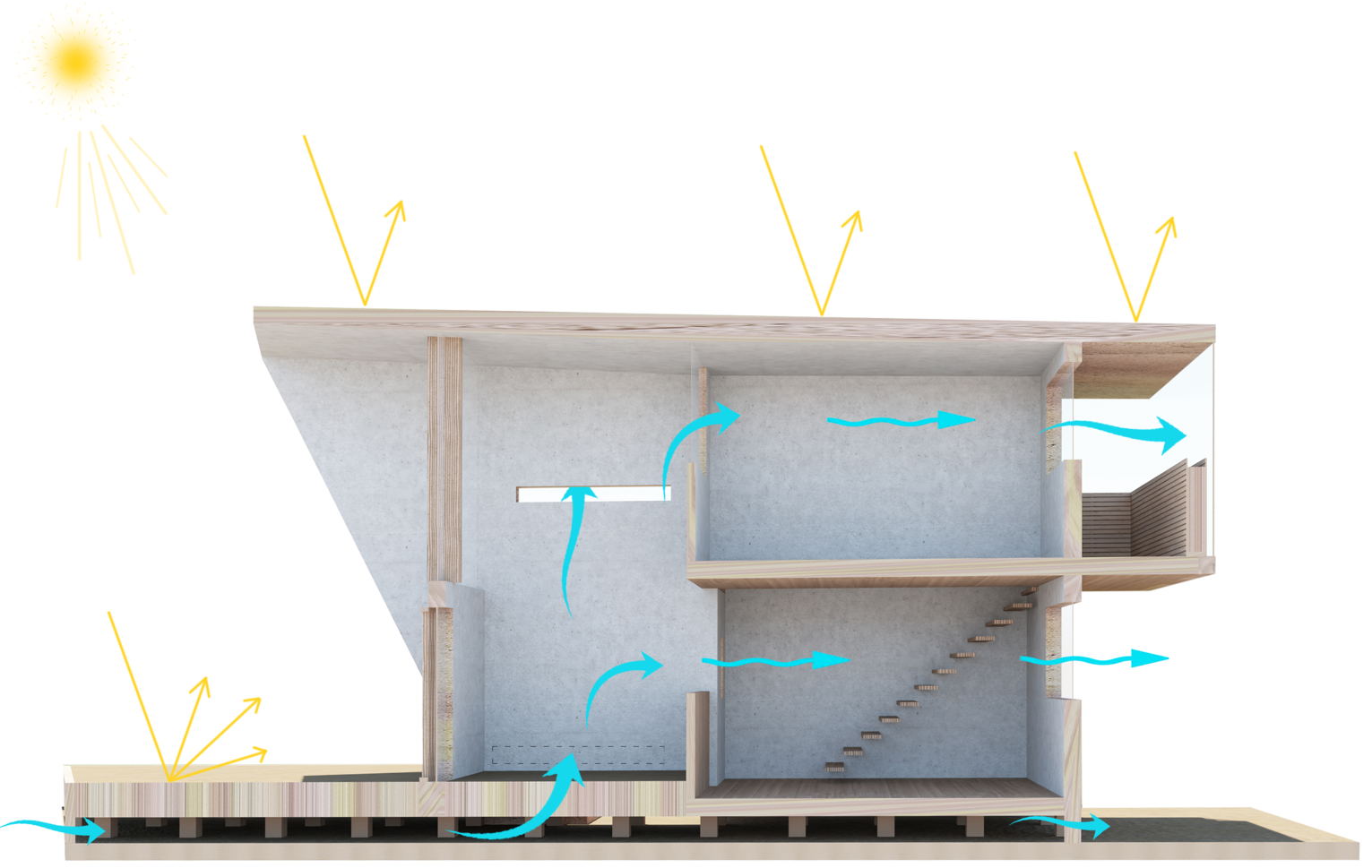
The environmental design is driven by solar orientation, passive cooling, and natural ventilation. Window size and placement are carefully developed through solar analysis to control sunlight, reduce overheating, and bring in balanced daylight throughout the day. The ventilation strategy supports natural cooling by encouraging air movement through the house, reducing reliance on mechanical systems. Together, these elements create a comfortable interior climate while demonstrating how architectural design can work with local environmental conditions rather than against them.
Morning
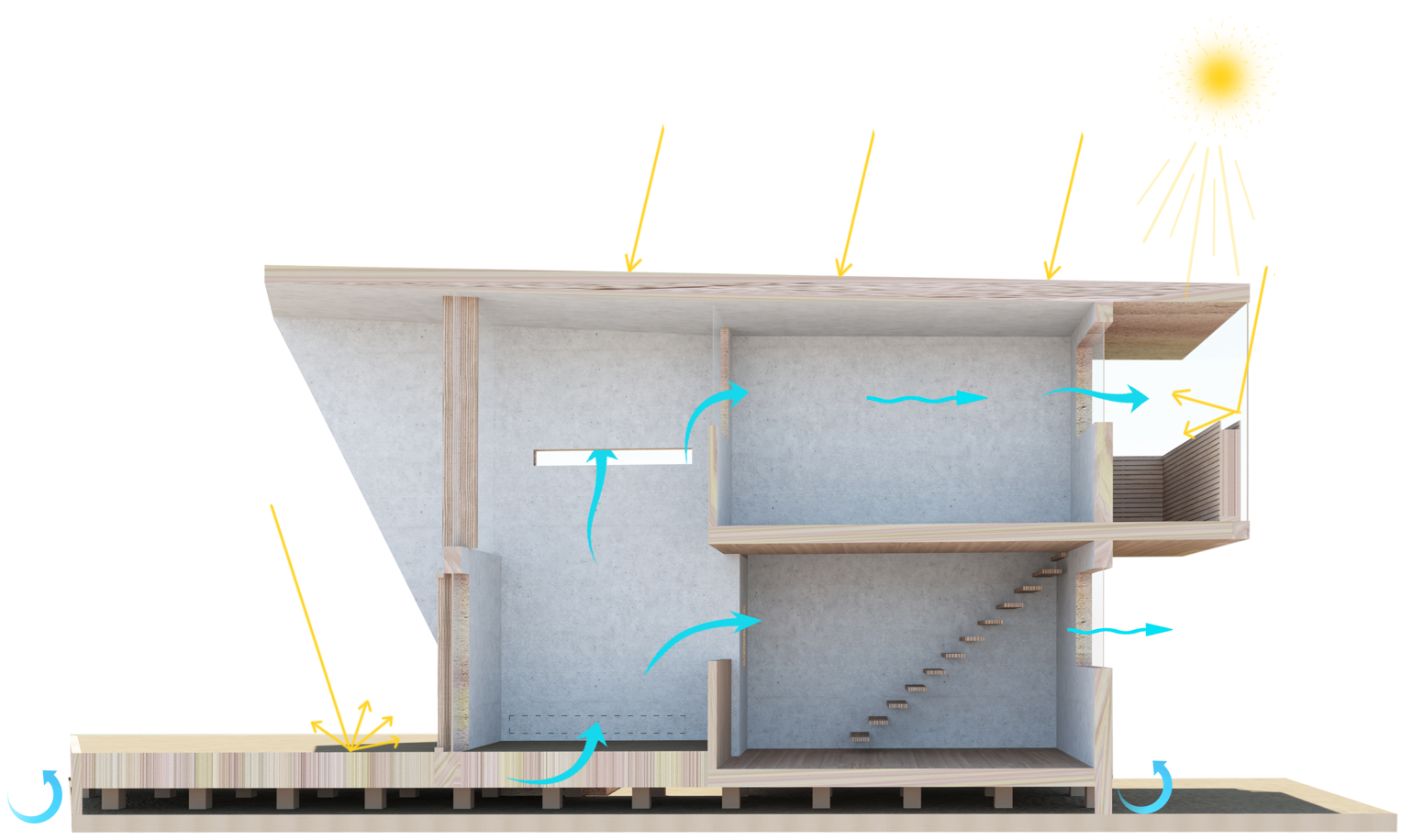
Afternoon
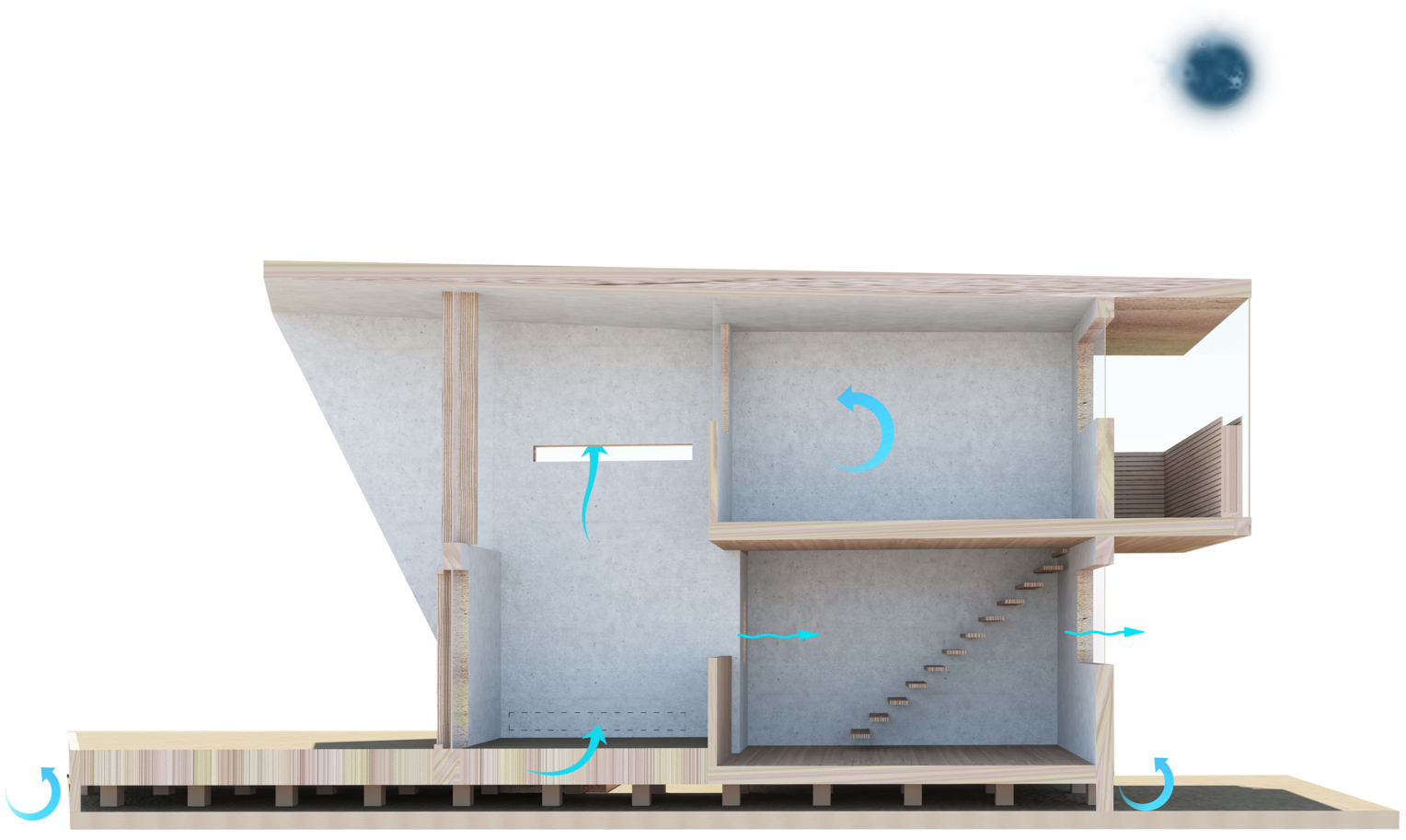
Night