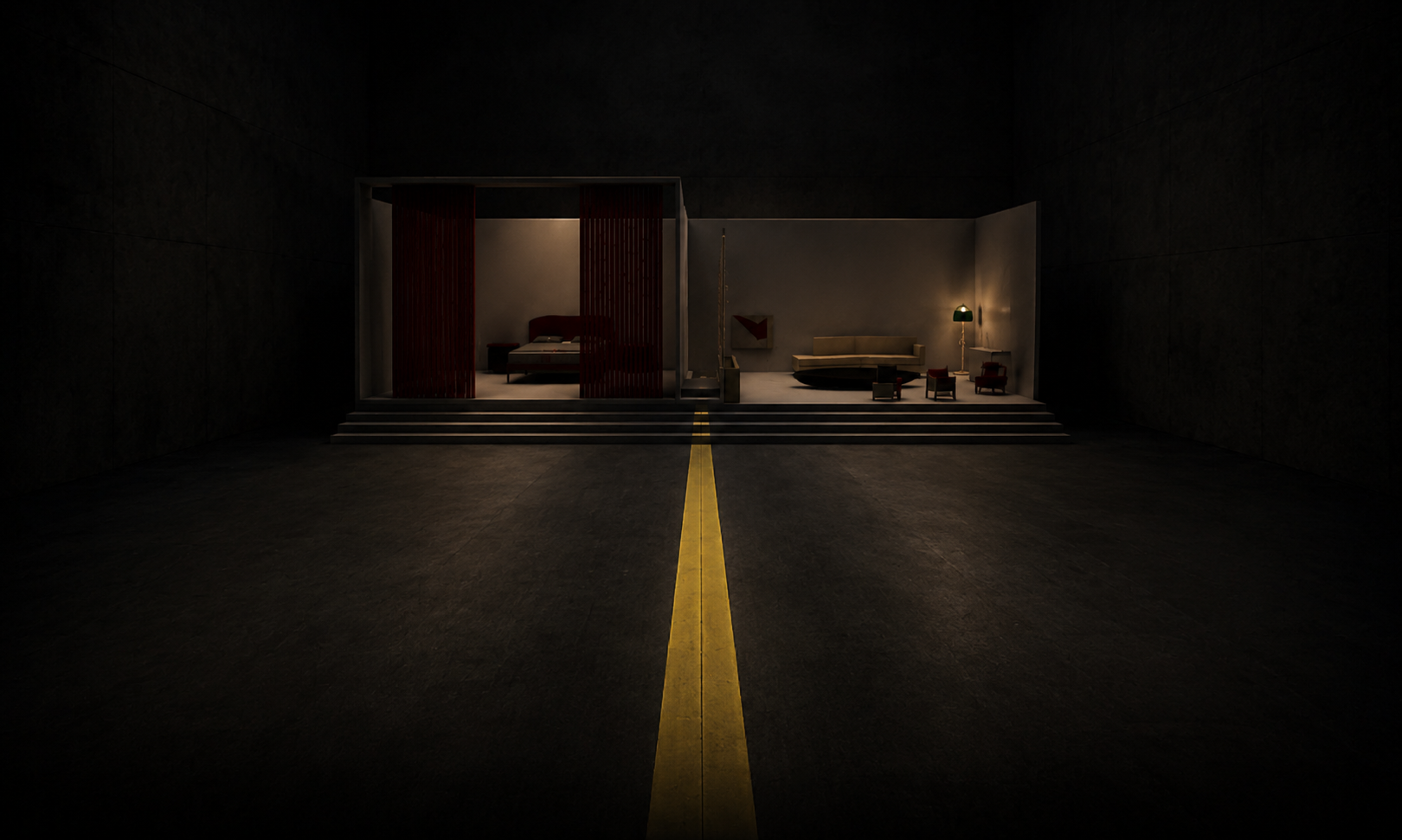
lost highway
A personal project by Alexandra Kalymniou
the project
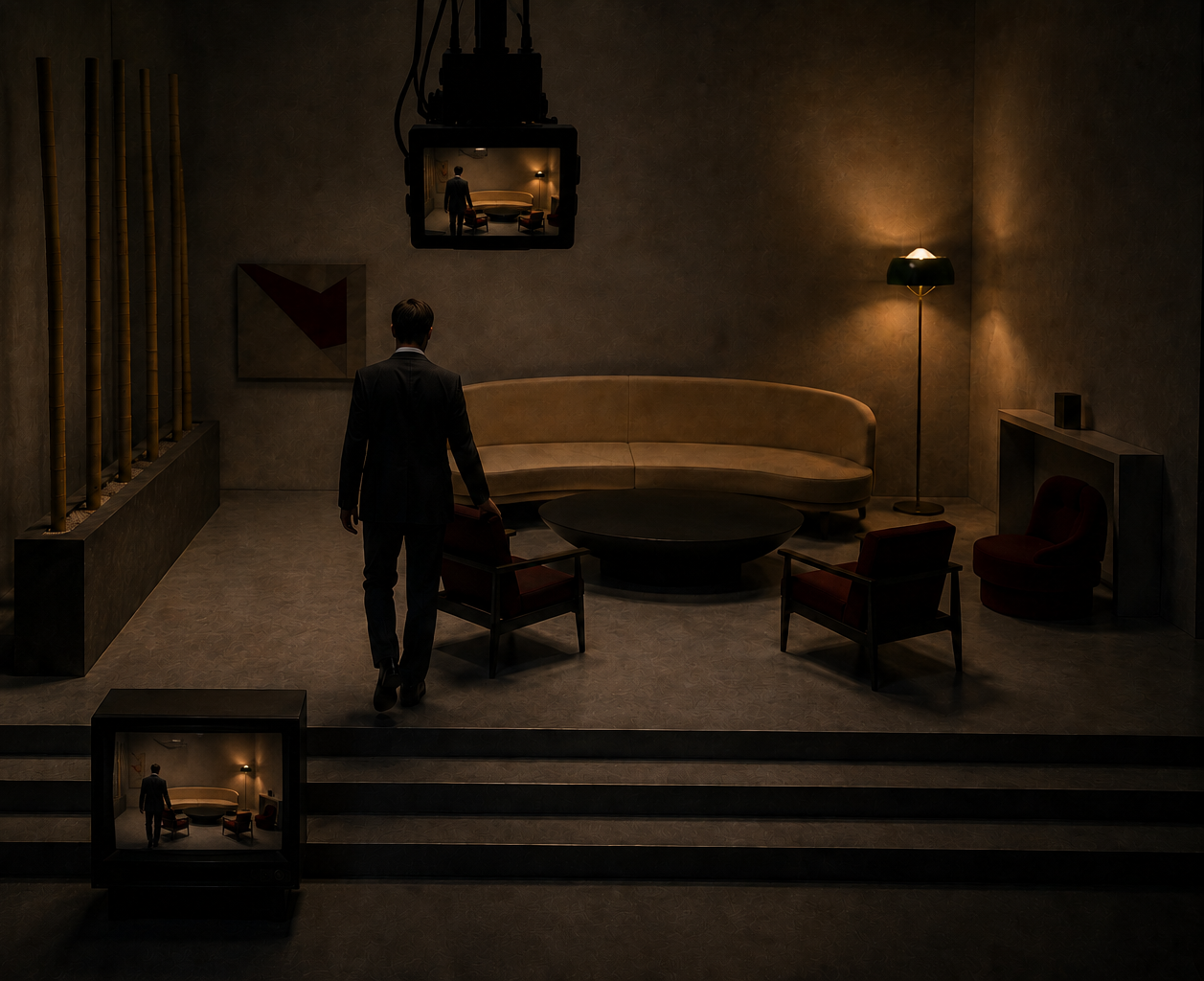
This project is a conceptual theatre set design translating David Lynch's Lost Highway from screen to stage. This project is built around the film's original spatial logic — two rooms arranged for continuous, unbroken movement — with an overhead camera tracking silently behind a single actor throughout the performance. This project streams that live footage directly to a television facing the audience, collapsing the boundary between watcher and watched.
Personal conceptual project — proposed for potential future development as a stage production.
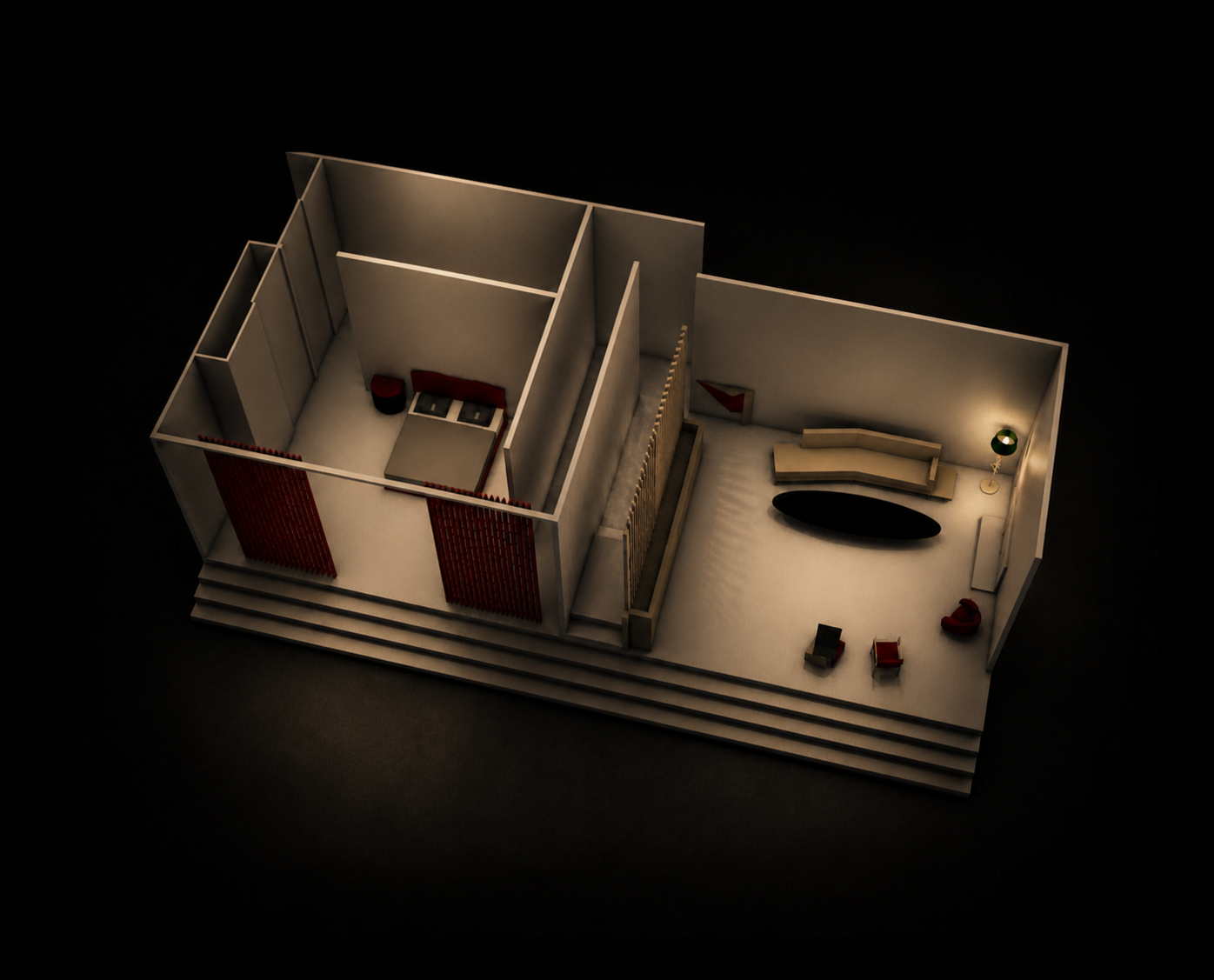
3D Created in AutoCAD
The concept
David Lynch designed the house in Lost Highway as a single, traversable space — long corridors, open thresholds, rooms that bleed into one another — specifically to allow the camera to move without cutting. That spatial logic is the foundation of this project.
Transplanted to the theatre, the same floor plan becomes a stage, and the camera's relentless, unhurried surveillance of its characters becomes a live mechanical presence the audience can see and hear overhead.
Where cinema hides its apparatus, this set makes it central. The act of watching — always unsettling in Lynch's work — becomes the subject of the performance itself.
The design
The set follows the film's layout directly:
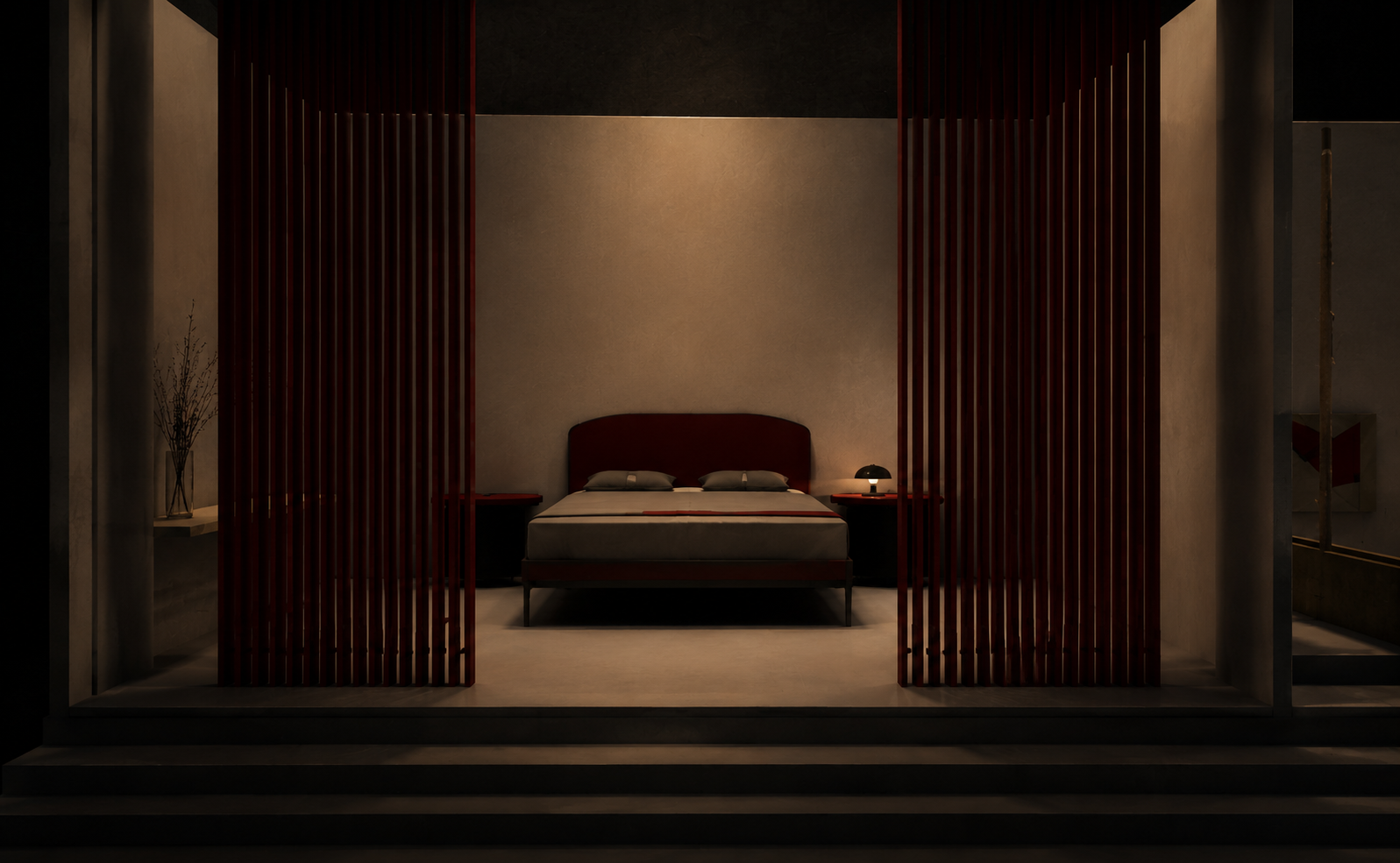
A bedroom on the left, a living room on the right, separated by a dividing wall with a single doorway connecting them. Both rooms are raised on steps, giving the audience a slightly elevated view into the space, as though looking into a doll's house or a surveillance monitor.
Furniture and materials reference the film's original palette — deep reds, dark timbers, a slatted wooden screen — keeping the aesthetic recognisably Lynchian without reproducing it literally.
The open front face of the set, visible from the audience at all times, means there is no offstage. Every part of the space is always exposed.
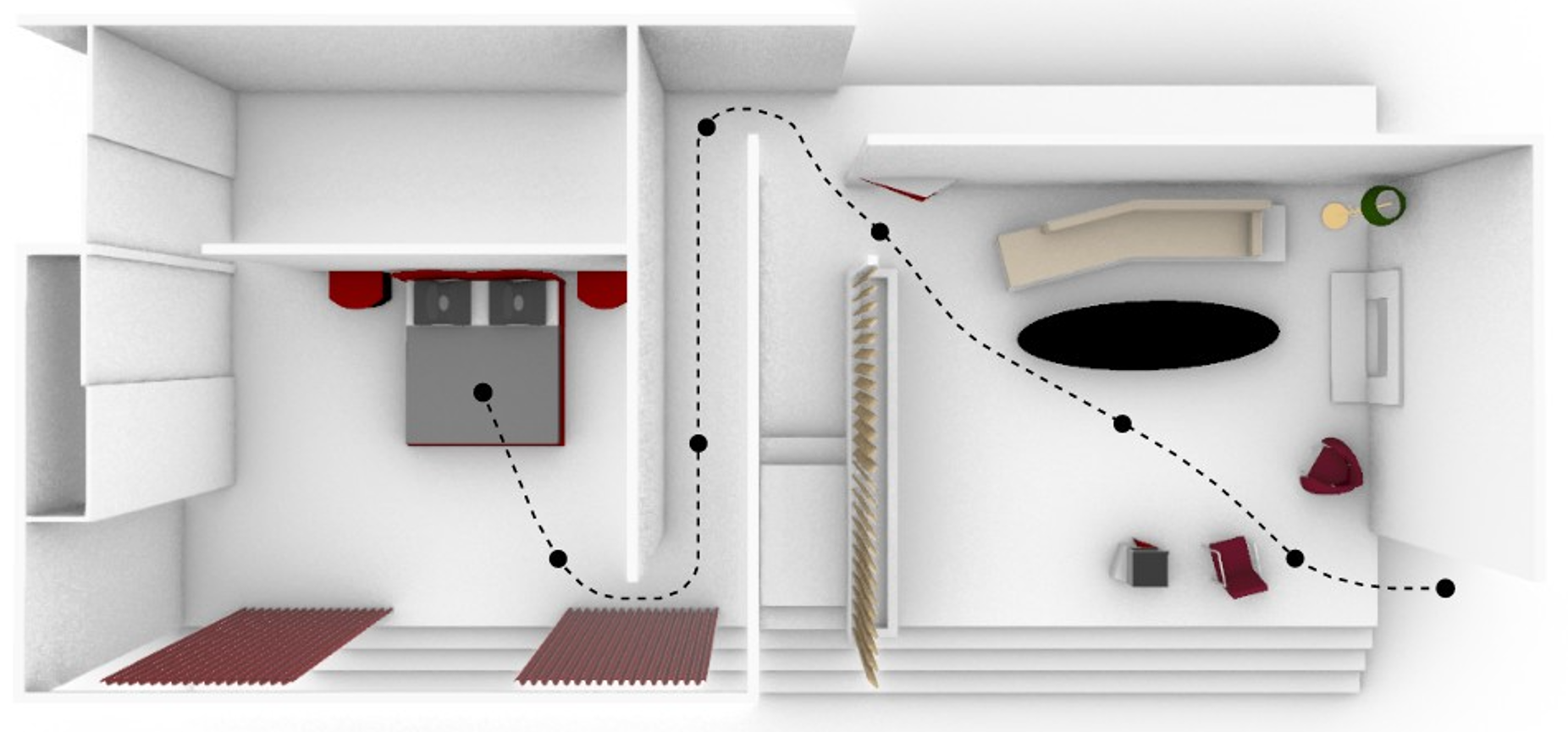
Camera movement diagram - 3D in AutoCAD
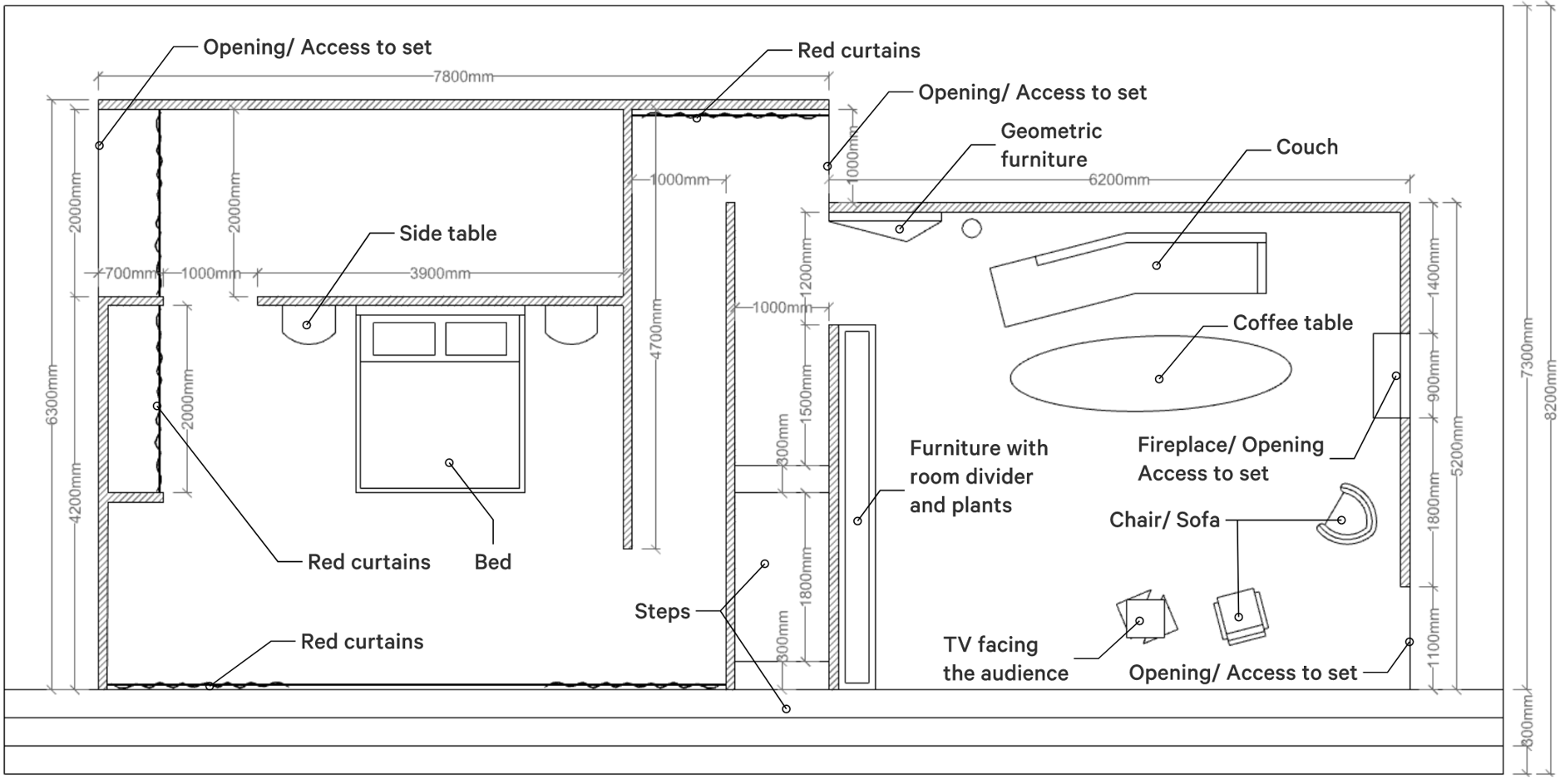
Set plan created in AutoCAD
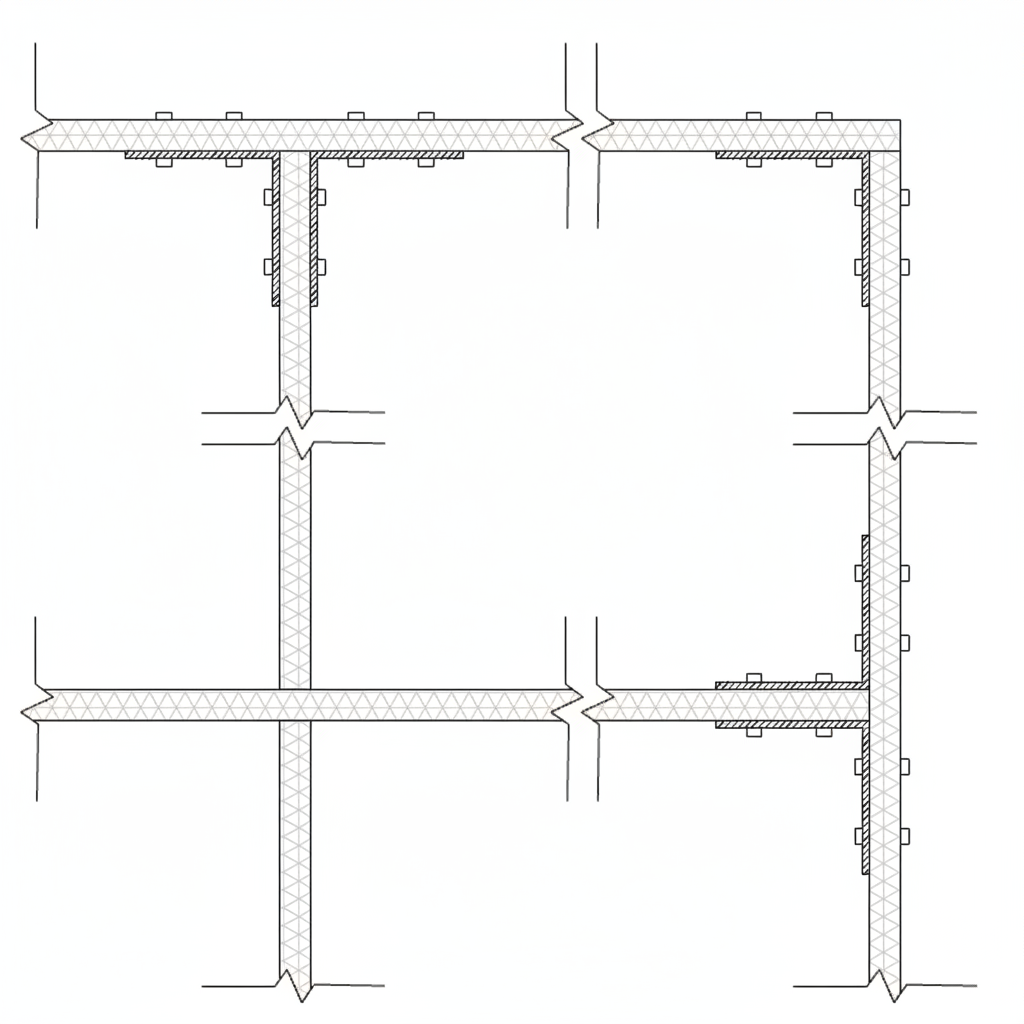
Bracket connection at the set base created in AutoCAD
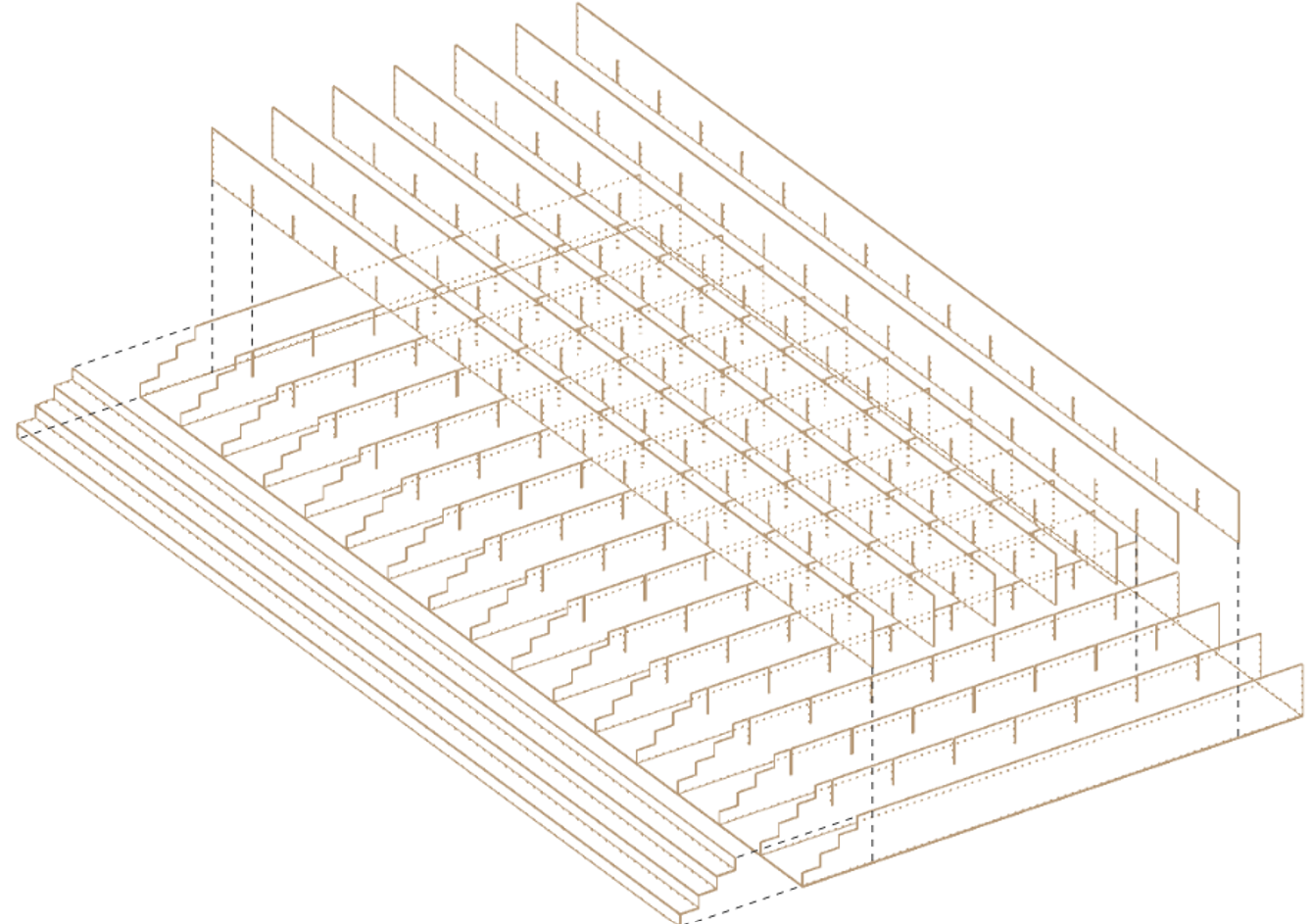
Exploded axonometric of the set base created in AutoCAD
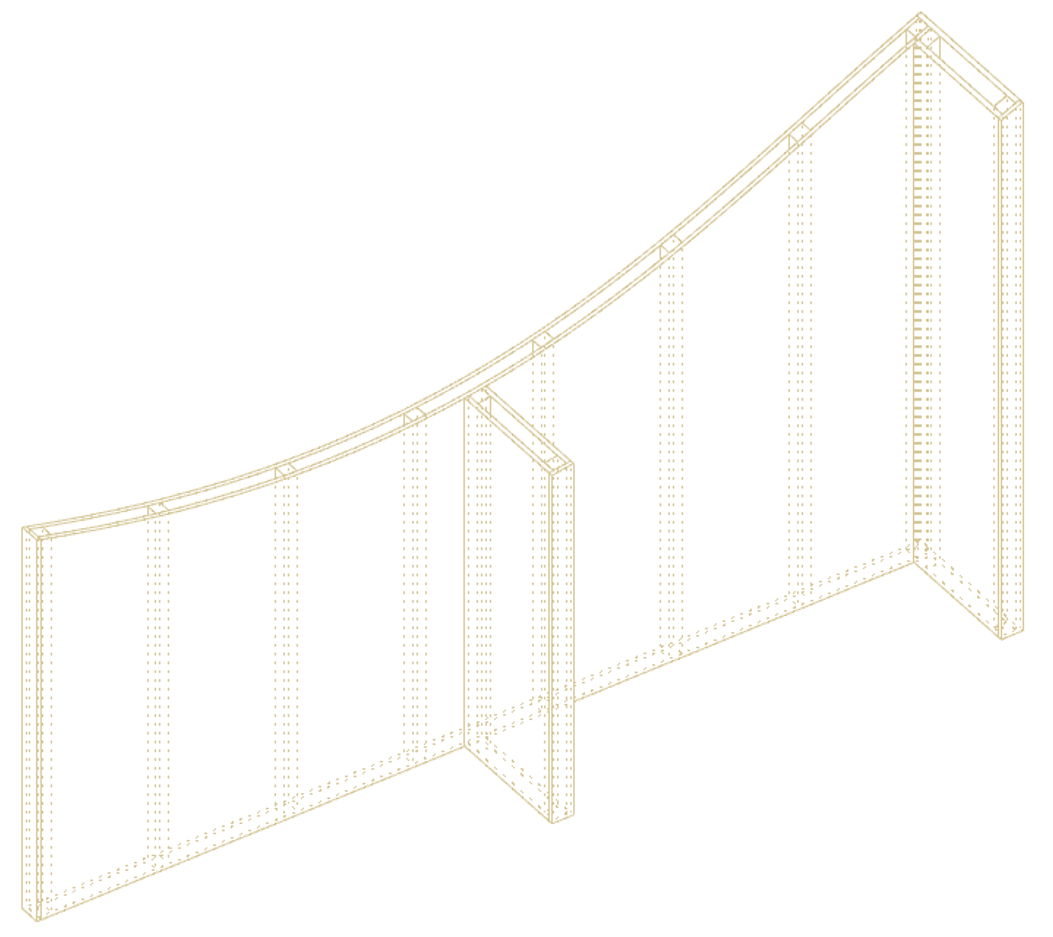
Wall build-up created in AutoCAD
The technology
A camera mounted on a ceiling rail runs the full width of the set, spanning both rooms without interruption.
Throughout the performance it tracks a single actor from behind, maintaining a fixed distance, close enough to feel intimate, far enough to feel like surveillance.
That footage streams live to a television in the living room, positioned to face the audience directly.
The result is a doubling: the audience watches the actor move through the space in real time, and simultaneously watches a mediated version of that same movement on screen.
The two images are never quite the same.
That gap between the live body and its recorded image is where the piece lives.
AI genrated Image